 Play video
Breaking AI's 1-GHz Barrier: Sunny Madra (Groq)
AI Engineer session on Breaking AI's 1-GHz Barrier: Sunny Madra (Groq). It adds practical context for how teams are building and operating AI systems in production.
Browse entries 1081–1104 of 1710. Return to the first page to search and filter the complete collection.
Play video
AI Engineer session on Breaking AI's 1-GHz Barrier: Sunny Madra (Groq). It adds practical context for how teams are building and operating AI systems in production.
 Play video
AI Engineer session on System Design for Next-Gen Frontier Models, presented by Dylan Patel, SemiAnalysis. It adds practical context for how teams are building and operating AI systems in production.
 Play video
AI Engineer session on Accelerate your AI journey with Azure AI model catalog: Sharmila Chokalingam. It adds practical context for how teams are building and operating AI systems in production.
 Play video
AI Engineer session on Lessons from the Trenches: Building LLM Evals That Work IRL: Aparna Dhinkaran. It adds practical context for how teams are building and operating AI systems in production.
 Play video
AI Engineer session on Evaluating Domain Specific LLMs for Real World Finance, presented by Waseem Alshikh, Writer. It adds practical context for how teams are building and operating AI systems in production.
 Play video
AI Engineer session on Productionizing GenAI Models, presented by Lessons from the world's best AI teams: Lukas Biewald. It adds practical context for how teams are building and operating AI systems in production.
 Play video
AI Engineer session on WTF do people use Open Models for??. It adds practical context for how teams are building and operating AI systems in production.
 Play video
AI Engineer session on Fine tune 20 Llama Models in 5 Minutes: Santosh Radha. It adds practical context for how teams are building and operating AI systems in production.
METR’s March 2024 study compares model versions and agent scaffolds on 195 tasks across twelve families. Later post-training versions of the same base models improved measured autonomy, while the additional scaffold gains studied were small and not statistically significant. The task selection, limited enhancement methods and lack of model-weight access constrain generalization.
 Play video
Lakshya Agrawal’s publisher notes describe GEPA’s reflective search: inspect execution traces and errors, propose text changes, score candidates, and retain alternatives that work well on different examples. Optimize Anything extends the editable object from prompts to programs, skills and policies. The reusable method depends on informative feedback and a suitable evaluator.
 Play video
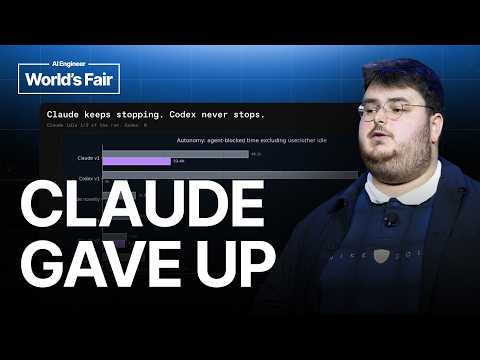
Elie Bakouch’s publisher notes describe coding agents proposing optimizer changes, submitting cluster jobs and checking whether results improve a constrained training benchmark. Agents could consult community submissions, and some runs received human prompts to continue. Reported record improvements therefore mix independent search with reuse of existing research. No novel optimizer emerged in the account.
 Play video
Tejas Bhakta’s publisher notes describe a kernel-optimization loop that proposes changes, checks correctness, benchmarks them and keeps or reverts each candidate. Humans supply the higher-level optimization idea and target-hardware context. The central failure mode is optimizing an isolated metric: disabling CUDA graphs or testing only short contexts can make the kernel score improve while inference worsens.
 Play video
Andrew Dai’s publisher notes describe counting and video-tracking failures in which scene recognition substitutes for inspecting the visible details. A partial chessboard can elicit the familiar count for a whole board; a video answer can omit changes that occurred earlier. These are reported examples rather than measured failure rates.
 Play video
Jerry Liu’s publisher notes separate document parsing, storage and recurring workflows from an agent’s iterative retrieval loop. A fast initial parse can make a collection searchable, followed by deeper visual inspection of selected tables or charts. The design preserves source citations and flags uncertain extracted values before they enter downstream systems.
 Play video
An AI skill is a piece of code you hand a model to extend what it can do, and once engineers start sharing skills with each other, each one becomes a supply chain risk, more so inside a regulated bank.
 Play video
This talk was recorded at NDC Copenhagen in Copenhagen, Denmark. #ndccopenhagen #ndcconferences #developer #softwaredeveloper Attend the next NDC conference near you: https://ndcconferences.com https://ndccopenhagen.com/ Subscribe to our YouTube channel and learn every day: / @NDC Follow our Social Media!
METR’s June 2025 proposal asks what AI developers should disclose about serious model risks, including internal capabilities, monitoring, safety investigations and incident history. It organizes questions around information that outsiders cannot reliably infer from public model behavior, and discusses disclosure incentives and the limits of developer self-reporting. Sensitive evidence could be assessed by trusted reviewers rather than exposed publicly.
 Play video
AI Engineer session on The Age of the Agent: Flo Crivello. It adds practical context for how teams are building and operating AI systems in production.
 Play video
Jake Broekhuizen distinguishes retaining conversation traces from producing memory that changes later behavior. Facts, useful past examples, and procedural instructions serve different purposes and need different update policies. The talk describes extracting lessons from runs, storing them outside the immediate conversation, and loading relevant material on later tasks.
 Play video
Charles Frye explains an inference engine as a request server, a scheduler and a model runner. Queueing and prompt prefill contribute to time to first token; repeated decoding governs later token delivery. KV caching, prefix reuse, batching, CUDA graphs and speculative decoding address different parts of that workload and introduce their own resource tradeoffs. A museum application example illustrates how a demand spike can worsen both initial and subsequent token latency.
July 2026's agentic AI security roundup: agentic zero trust whitepapers, AutoJack & other new exploits, and the newest agent defenses. The post Top Agentic AI security resources — July 2026 first appeared on Adversa AI .
 Play video
AI Engineer session on The End of Apps, presented by Kitze, Sizzy.co. It adds practical context for how teams are building and operating AI systems in production.
 Play video
AI Engineer session on It Ain't Broke: Why Software Fundamentals Matter More Than Ever, presented by Matt Pocock, AI Hero @mattpocockuk. It adds practical context for how teams are building and operating AI systems in production.
 Play video
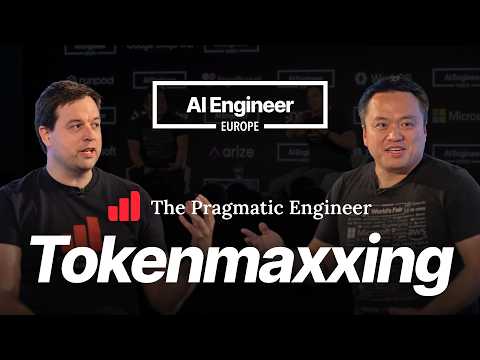
AI Engineer session on How AI is changing Software Engineering: A Conversation with Gergely Orosz, @The Pragmatic Engineer. It adds practical context for how teams are building and operating AI systems in production.