Zimperium describes RatHat combining accessibility abuse, local ADB pairing and native background processes to maintain Android access after the main app is removed. The researchers also report AI-assisted interface navigation; that capability is attributed to their analysis.
Forever Security documents malicious extensions reaching privileged AI-assistant surfaces across several browsers. The BragJack research concerns extension permissions and assistant integration boundaries, with different impact and remediation across products.
Okta analyzes infostealer data containing AI-service session tokens, refresh credentials and API keys. Some tokens were still unexpired when the dataset appeared, creating potential access without a fresh login; the report does not establish successful replay of every token.
Google Threat Intelligence describes a campaign that moved from compromised cloud resources to an agent-enabled credential-harvesting operation in under six hours. Its broader report covers adversaries targeting AI assets, software supply chains and inference credentials.
Check Point demonstrated cross-account communication through a shared package service reachable by separate ChatGPT execution environments, including a Gmail-data proof of concept. The researchers say OpenAI confirmed that the implicated Artifactory instance had been decommissioned.
Mantis is part of how Google finds and fixes vulnerabilities at machine-speed. The open-source AI harness creates a more effective repository analysis.
CISA added Ray CVE-2025-62593 to its Known Exploited Vulnerabilities catalog. The flaw combines unauthenticated job APIs with DNS rebinding so Firefox or Safari can make a developer's browser act as a confused deputy and execute shell code on a local or network-adjacent Ray instance. Ray fixed it in 2.52.0; reporting also links the public exploit to RondoDox and GPU-mining activity.
LiteLLM versions 1.82.7 and 1.82.8 were malicious PyPI releases available for about 40 minutes on March 24. A .pth file executed at Python startup and collected environment variables, SSH keys, cloud credentials, Kubernetes tokens, and database secrets. CloudSEK's later dataset indicates broad exposure, but its organization and file totals are not confirmed victim counts or evidence that stolen credentials were used.
Wiz post on AI threat readiness and secure-by-default cloud operations in a faster vulnerability environment. The value for this library is the platform-security angle: AI-era systems need inventory, exposure reduction, posture management, and rapid remediation built into normal operating practice.
METR distinguishes three measures of AI productivity: time saved on the pre-AI task mix, value gained after people reallocate their work, and time saved on the post-AI task mix. Under stated simplifying assumptions, old-task uplift is a lower bound and new-task uplift an upper bound on value uplift, because AI changes which tasks people choose to attempt.
METR examines NanoGPT speedrun contributions as evidence of AI research progress, classifying changes by depth and provenance. The note emphasizes contamination, unobserved failed attempts and the limits of extrapolating small-model training improvements to frontier research.
Wiz analyzed malicious LiteLLM releases 1.82.7 and 1.82.8 in the TeamPCP supply-chain campaign. One payload runs through the proxy import path; the later release also adds a Python .pth file that can execute during interpreter startup. The malware targets credentials reachable from developer, CI and cloud environments and includes persistence behavior. The maintainer confirms the affected versions. Removing a package does not revoke secrets already exposed during execution.
METR compared Claude Code and Codex with its usual scaffolds using Opus 4.5 and GPT-5 on autonomous time-horizon tasks. Neither specialized scaffold showed a statistically significant advantage in those comparisons. The investigation corrected scoring artifacts and examined budgets, wrapper errors and agents expecting a human response. The result is specific to the tested models, versions and unattended task distribution, rather than a current ranking of coding products.
AI models can now find high-severity vulnerabilities at scale. This is a moment to empower defenders. We're now using Claude to find and help fix vulnerabilities in open source software.
Cisco Talos analyzes a Windows stealer that gathers credentials and session data, enriches a victim profile using stolen access, and sends that profile to models through OpenRouter. Telegram transfers can occur before and after the AI analysis. The model stage helps prioritize stolen assets; preventing an inference request alone would not undo the earlier theft.
 Play video
Sagar Batchu describes an authorization design that limits each request by the credential’s scope, the agent’s policy and the accountable owner’s current permissions. His staging-versus-production example distinguishes valid credentials from permission for a particular operation. The gateway also records the agent, operator, authorizer and decision. This is an architecture walkthrough, not a verified product security evaluation.
 Play video
Ramakrishnan Lokanathan uses an image edit that changes the requested background but also adds an unwanted handle to show why a final-answer check can miss damage. He proposes stage-specific checks, human review, adversarial cases and a feedback path from production failures into regression tests. Game evaluations are an additional diagnostic, not proof of fitness for a production task.
 Play video
Shiv Indap and Brooke Hopkins describe reviewing voice-agent calls against explicit behavioral criteria, resolving disagreements among human reviewers and correcting the automated judge separately from the agent. Confirmed failures are routed to responsible teams and replayed in voice simulations before changes ship. Their private agreement figures do not establish general judge accuracy or regulatory compliance.
 Play video
Supriya Subudhi describes an AI photo-feedback experiment where stated interest differed from use and positive aggregate results hid inappropriate suggestions. The team inspected real outputs by user segment and revisited quality after changing models. These failure examples motivate evaluation beyond an average uplift; private adoption, cost and geographic rollout claims are not independently established.
 Play video
Ishween Kaur’s testnet experiments examine price changes, repeated payments, premature data delivery, cross-endpoint replay, lookalike sellers and prompt-induced extra purchases. The walkthrough distinguishes signature verification from settlement and binds payment identifiers to delivery. Its successful guards apply to the demonstrated cases, not every x402 implementation.
 Play video
Mikyo King describes letting agents discover tools and compose calls in a coding environment, returning only needed results to context. The approach adds resource, egress, secret and permission boundaries, plus recovery problems when a program fails midway. Arize evaluates changes with repeated Harbor trials and outcome verifiers. Its reported efficiency gains are private results.
 Play video
Bridgewater and turbopuffer explain why filtering nearest-neighbor results afterward can miss relevant authorized documents, while scanning all permitted documents can be slow. Their worked model combines direct-user and group permissions with indexed filtering during search. Public query docs expose the filter operators. Private scale and latency figures do not establish security or universal performance.
 Play video
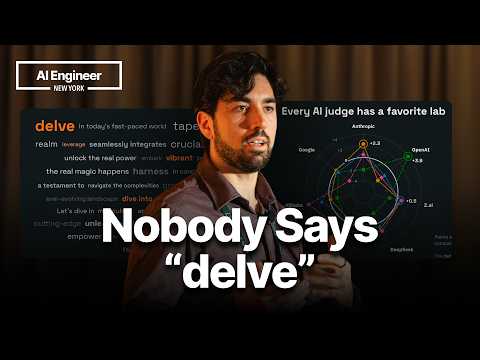
ToneBench evaluates scripts in one creator’s voice using repeated drafts, a detailed rubric, and multiple judges. Its public methodology tests sensitivity to judges, scripts, weights, and length. The current board uses automated judgments; it does not measure human preference or audience success. Ten reference scripts and partially private inputs limit how far its rankings generalize.
 Play video
Nathanael Weill builds tests from known answers: generate questions from source pages, plant contract defects, remove required clauses, and vary details that should not change the result. Missing-clause tests exposed failures that plausible answers hid. Expert feedback improves the test set. These synthetic checks accelerate development but do not establish readiness for deployment.