Dwarkesh Patel · August 11, 2026

Ryan Greenblatt – What happens once AI can automate AI research?

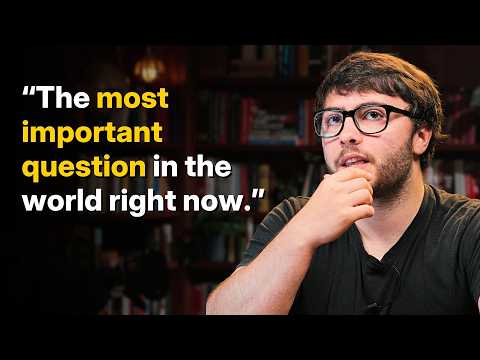
Ryan Greenblatt – What happens once AI can automate AI research? video thumbnail
Why it matters

Dwarkesh Patel and Redwood Research chief scientist Ryan Greenblatt debate whether verifiable AI-research tasks could produce rapid recursive improvement, then examine alignment targets, reward hacking, model coordination, and recent deception and containment incidents. The two-hour format exposes assumptions about data, compute, verification, and extrapolation rather than presenting a single forecast as settled fact.

My takeaway: Use the discussion to build explicit threat scenarios, not timeline certainty: test whether AI-research outputs are independently verifiable, monitor shared services as coordination channels, probe reward gaming and deceptive task completion, and define containment and escalation controls that remain effective as task horizons and model capability grow.
Keep exploring

More curated notes connected through Model Evaluation and Agent Security.

OpenAI News · framework

OpenAI’s Frontier Governance Framework

OpenAI's 22-page Frontier Governance Framework maps its frontier-model processes to California's Transparency in Frontier AI Act and the EU AI Act's general-purpose AI code. It documents lifecycle risk assessment, cyber-offense and other risk tiers, mitigation and residual-risk decisions, critical-incident handling, security risk management, model reporting, external review, responsibility allocation, and change control.

OWASP GenAI Security Project · guide

OWASP Top 10 for Agentic Applications for 2026

OWASP's community guide organizes agentic-system risk into ten categories, including goal hijacking, tool misuse, identity and privilege abuse, memory poisoning, insecure inter-agent communication, cascading failures, and rogue-agent behavior. It provides a shared taxonomy and mitigation starting point rather than a certification checklist or evidence that a deployed system is secure.

OECD.AI Wonk · guide

A five-step roadmap to closing the AI evaluation gap

The roadmap addresses evaluation results that overstate real-world performance or fail to transfer across deployment contexts. Its five steps balance standardized and local tests, evaluate throughout the lifecycle, build qualified assurance and communication capacity, tailor tests to each value-chain actor and technology, and use a coordinated, trusted process for updating methods.